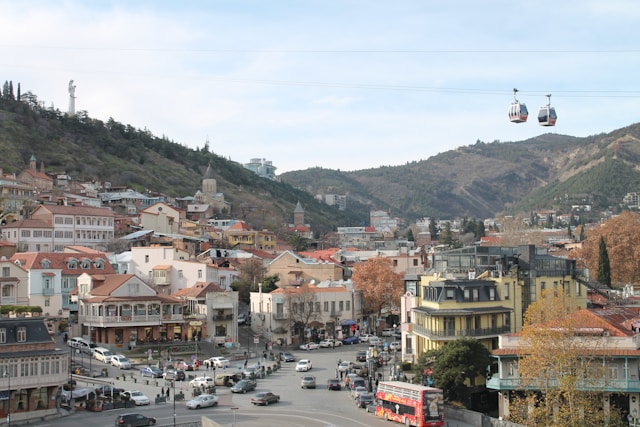
Georgia is often described as an easy country to travel through, but first-time visitors quickly realize that transportation decisions are rarely straightforward. Distances are short, yet travel times fluctuate. Public transport exists almost everywhere, yet flexibility is limited. Roads range from modern highways to narrow mountain passes.
This guide focuses on how travelers actually make transportation decisions in Georgia. Rather than listing options in isolation, it explains why certain choices work better in specific situations, where expectations often clash with reality, and how planning mistakes affect the overall travel experience.
Why Transportation Planning Matters More Than Expected
Many travelers arrive in Georgia with a loosely defined plan, assuming transportation will be simple once they are on the ground. In practice, transportation often becomes the most time-consuming part of the journey.
The reason is not poor infrastructure, but diversity. Georgia combines:
- dense cities,
- wine regions with scattered villages,
- high mountain roads,
- coastal highways,
- rural areas with limited daily connections.
Transportation choices that work well in one region may fail completely in another.
The Core Transportation Options Available to Travelers
Most visitors rely on a combination of the following:
- minibuses (marshrutkas),
- trains,
- taxis and ride-hailing services,
- rental cars.
Each option solves a specific problem, but none solves all of them.
Marshrutkas: Efficient but Inflexible
Minibuses remain the most common form of intercity transport. They are inexpensive and widely available, particularly on popular routes.
When Marshrutkas Make Sense
- straightforward city-to-city travel,
- flexible schedules,
- minimal luggage,
- travelers comfortable with shared transport.
When They Create Problems
- routes through mountain regions,
- travelers with tight timelines,
- itineraries requiring multiple stops,
- families or groups carrying equipment.
Because marshrutkas depart when full, waiting times are unpredictable. This becomes especially frustrating on routes with only a few daily departures.
Trains: Comfortable, Predictable, and Limited
Georgia’s train network connects several major cities with modern rolling stock and reliable schedules.
Strengths
- comfortable seating,
- fixed departure times,
- good value for longer distances.
Limitations
- limited coverage,
- arrival points often far from rural attractions,
- requires additional transport upon arrival.
Trains work best when cities themselves are the destination, rather than starting points for exploration.
Taxis and Ride-Hailing: Local Convenience Only
In urban areas, taxis and ride-hailing apps are widely used. They provide convenience but are not designed for regional travel.
For long distances, taxis are expensive and less practical, particularly outside major cities where availability drops sharply.
The Moment Travelers Start Considering a Car
Most travelers begin considering a car not because public transport is unavailable, but because it restricts their plans.
This usually happens when:
- destinations are spread across regions,
- routes involve mountains or remote villages,
- travelers want to stop frequently,
- timing becomes critical.
The decision is less about comfort and more about control.
How Travelers Evaluate Whether a Car Is Worth It
Experienced travelers tend to evaluate car use based on four questions:
- How many regions will I visit?
- How flexible does my schedule need to be?
- Am I traveling during peak or off-season?
- How realistic is public transport for my exact route?
If two or more of these point toward uncertainty, a car often becomes the practical option.
Real Route Scenarios
Tbilisi to Kazbegi
Public transport reaches Kazbegi, but travelers miss stops along the Georgian Military Highway. Weather conditions also change quickly, making fixed schedules unreliable.
Batumi to Mountain Regions
Secondary roads and irregular transport make planning difficult. Waiting for connections can take longer than the drive itself.
Kakheti Wine Region
Public transport reaches main towns, but wineries and guesthouses are widely dispersed, often requiring additional taxis.
Common Planning Mistakes Travelers Make
Assuming Distances Equal Time
Mountain roads slow travel significantly. A short distance on the map can mean hours on the road.
Overloading Daily Itineraries
Trying to cover multiple regions in one day leaves little room for delays or spontaneous stops.
Ignoring Seasonal Reality
Snow, rain, fog, and landslides all affect travel conditions differently depending on the season.
Choosing Transport Too Late
Last-minute decisions limit available options, especially during busy periods.
Road Conditions and Driving Reality
Highways
Major routes between cities are generally well maintained.
Secondary Roads
Quality varies widely. Some are smooth; others are damaged or partially unpaved.
Mountain Roads
Narrow, winding, and often shared with livestock. Visibility changes quickly.
Driving in Georgia rewards patience and caution more than speed.
Choosing the Right Type of Vehicle
Vehicle choice matters more than travelers expect.
Compact Cars
- suitable for cities and main highways,
- efficient but limited on rough roads.
SUVs and Crossovers
- better ground clearance,
- more stable on uneven surfaces,
- preferred for mountain regions.
4×4 Vehicles
- necessary only for specific routes or winter conditions,
- unnecessary for most popular itineraries.
Many travelers prefer to compare vehicle categories, regional availability, and conditions in advance using local platforms such as rentcarsgeorgia.com, especially when planning routes beyond major cities.
Seasonal Impact on Transportation Decisions
Summer
Ideal road conditions, but heavy tourist traffic.
Autumn
Excellent scenery, but shorter daylight hours.
Winter
Snow and ice in mountain regions; winter tires become essential.
Spring
Rain increases the risk of road damage and landslides in rural areas.
Each season changes which transportation options remain reliable.
Fuel, Navigation, and Practical Considerations
Fuel stations are common on main routes but sparse in remote areas. Offline maps help when signal coverage drops.
Driving culture can feel assertive to newcomers. Defensive driving is recommended.
Planning Ahead Without Overcommitting
Travelers often look for transportation solutions that offer:
- transparent conditions,
- multiple vehicle categories,
- nationwide availability,
- simple online booking,
- optional delivery to different cities.
These features help reduce uncertainty without locking travelers into rigid plans.
Combining Transport Options Strategically
Many successful itineraries use a combination of methods:
- trains between major cities,
- cars for regional exploration,
- taxis for short urban trips.
This hybrid approach balances comfort, cost, and flexibility.
Final Thoughts: Choosing What Works, Not What Sounds Easy
Georgia rewards travelers who adapt their transportation choices to reality rather than expectations. There is no universally correct solution—only solutions that fit specific routes, seasons, and travel styles.
Understanding how transportation actually functions allows visitors to focus on landscapes, culture, and experience instead of logistics. Thoughtful planning, realistic timing, and flexible decision-making make the difference between a stressful itinerary and a rewarding journey.

website erstellen lassen bamberg says
webdesign agentur bamberg https://websiteerstellenlassenbamberg.de/
Thomasmigip says
После алкоголя в организме накапливаются токсичные продукты распада, нарушается водно-солевой баланс и страдает нервная система, что особенно выражено после запоя или при алкоголизме. Это проявляется головной болью, слабостью, тошнотой и нарушением сна. Капельница помогает ускорить процессы очищения и восстановить внутренние системы, обеспечивая более быстрое облегчение состояния и помогая человеку выйти из состояния запоев.
Получить дополнительные сведения – https://kapelnicza-ot-pokhmelya-voronezh-8.ru
ThomasJes says
Такой подход позволяет начать лечение без задержек и снизить риски, связанные с транспортировкой пациента. При этом помощь может предоставляться анонимно, что важно для многих пациентов.
Получить дополнительные сведения – [url=https://vyvod-iz-zapoya-na-domu-sankt-peterburg-9.ru/]вывод из запоя на дому круглосуточно санкт-петербург[/url]